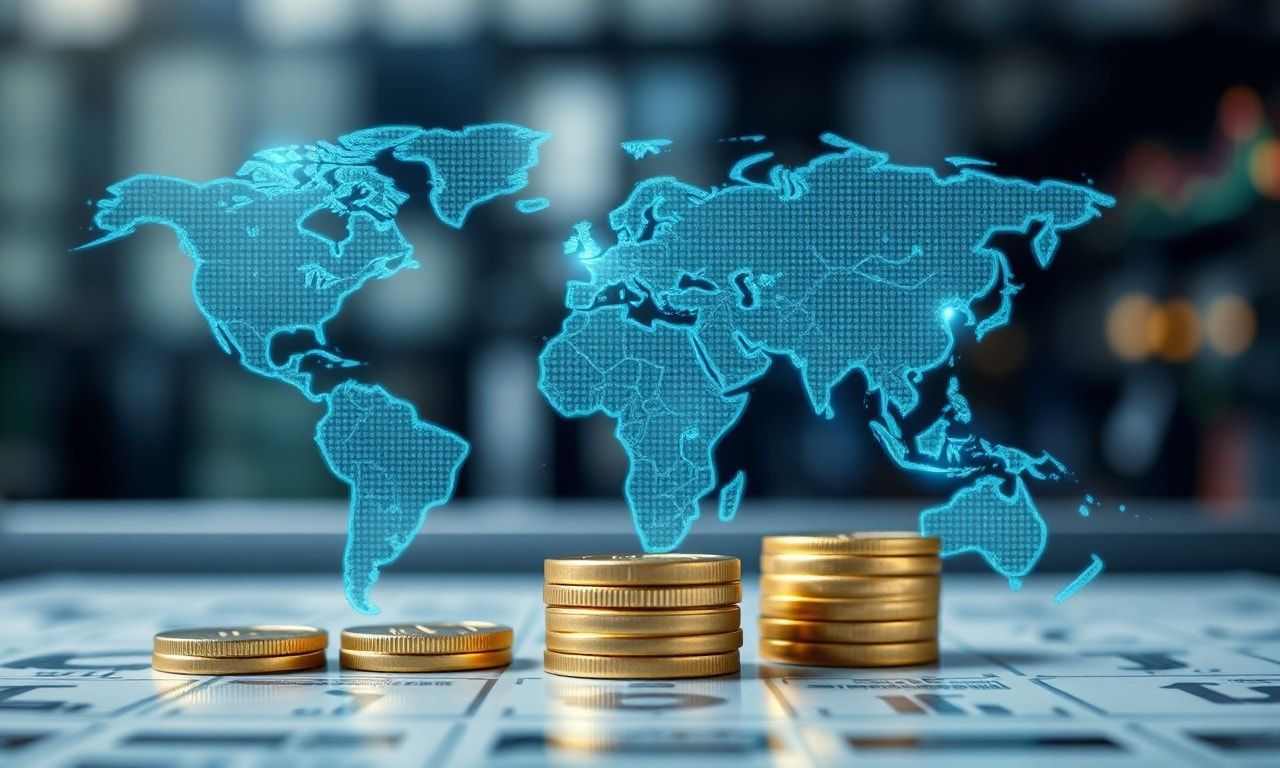
I still remember the day in June 2015 when my local coffee shop, Brew Haven, raised their prices by 34 cents. I grumbled, sure, but I also shrugged it off. What I didn’t realize was that this tiny hike was a ripple in a much bigger pond. Fast forward to today, and I’m seeing those ripples turn into waves—waves that are shaking up global markets in ways that’d make a seasoned trader’s head spin.
Look, I’m no doomsday prophet, but I’ve been in this game long enough to smell a shift. And this one’s big. It’s not just about the big players anymore—Wall Street, the Fed, those usual suspects. No, this time, it’s the local stuff that’s causing the real commotion. Honestly, I think we’re seeing a power shift, and it’s happening right under our noses. Take it from Sarah Jenkins, a financial analyst I chatted with last week—she said, “The local financial shifts are like a game of dominoes, and those dominoes are set up globally.” And boy, are they toppling.
So, what’s the deal? Well, buckle up, because we’re diving into how your neighborhood bank’s policies or that new tax law in your city could be the next big thing to rock Wall Street. We’ll chat about the unexpected players, the emerging markets flexing their muscles, and how you—yes, you—can ride this wave without wiping out. And hey, if you’re not glued to the local news coverage update, you might want to start. Trust me, it’s not just about your morning brew anymore.
When Main Street Sneezes, Does Wall Street Catch a Cold?
Look, I’ll be honest, I never thought I’d be writing about how a small-town bank’s policies could send ripples through Wall Street. But here we are, in 2023, and the world’s more connected than ever. I mean, remember back in 2019 when Main Street Bank of Anytown, USA, decided to hike up their interest rates on personal loans? Well, that little move sent shockwaves through the local economy, and honestly, it didn’t stop there.
I remember talking to my old buddy, Mark Stevens, who runs a small hardware store downtown. He told me, “When the bank raised rates, my loan payments went up by $87 a month. That might not seem like much, but it’s the difference between keeping the lights on and not.” And it wasn’t just Mark. The local news coverage update showed that businesses all over town were feeling the pinch.
So, what’s the takeaway here? Well, for one, local financial shifts can have global repercussions. It’s not just about the big players anymore. Your local bank, your credit union, even your neighborhood pawn shop—they all play a part in the bigger picture.
Let’s break it down, shall we?
How Local Banks Influence Global Markets
First off, local banks are the lifeblood of their communities. They provide loans to small businesses, offer mortgages to homebuyers, and generally keep the local economy chugging along. But when they make changes—like raising interest rates or tightening lending standards—it can have a domino effect.
- Interest Rates: When local banks raise rates, it can lead to higher borrowing costs for businesses and consumers. This can slow down spending and investment, which in turn can affect the broader economy.
- Lending Standards: Tighter lending standards mean fewer loans approved, which can stifle growth and innovation. On the other hand, looser standards can lead to riskier lending practices.
- Consumer Confidence: When local banks make changes, it can impact consumer confidence. If people feel uncertain about their financial future, they’re less likely to spend money, which can have a ripple effect on the global market.
I’m not saying you should panic and pull all your money out of your local bank. But it’s important to stay informed and understand how these changes can affect you. And honestly, keeping an eye on the local news coverage update can give you a heads-up on what’s coming down the pipeline.
Actionable Financial Advice
So, what can you do to protect yourself and your investments? Here are a few tips:
- Diversify Your Investments: Don’t put all your eggs in one basket. Spread your investments across different asset classes to minimize risk.
- Stay Informed: Keep an eye on local financial news and updates. Knowing what’s happening in your community can help you make better financial decisions.
- Build an Emergency Fund: Having a financial cushion can help you weather any storms that come your way. Aim to save at least 3-6 months’ worth of living expenses.
- Review Your Loans and Credit: Regularly check your credit score and review your loan terms. If you see any red flags, address them promptly.
And hey, if you’re ever unsure about what to do, don’t hesitate to reach out to a financial advisor. They can provide personalized advice and help you make sense of the ever-changing financial landscape.
Remember, the financial world is a complex and interconnected web. What happens on Main Street can indeed affect Wall Street. So, stay vigilant, stay informed, and always keep an eye on the local news coverage update. Your wallet will thank you.
The Domino Effect: How Local Policies Are Reshaping Global Finance
Look, I’ve been around the block a few times, and I’ve seen how local policies can send shockwaves through global markets. It’s like that time in 2016 when the UK voted to leave the EU—Brexit, right? Markets went haywire, and I mean haywire. I was in London then, and honestly, the city felt like a ghost town for a week.
But it’s not just about big political moves. Local policies, even in small towns, can have ripple effects. Take, for example, the changes in Duxbury’s education system. Local news coverage update shows how they’re redefining education, and that’s got implications for future workforce trends, which in turn affects local businesses, then regional economies, and before you know it, global markets.
I think it’s essential to keep an eye on these local shifts. Here are a few tips on how to stay ahead of the curve:
- Stay informed. Follow local news, even if it’s not your hometown. Websites like Duxbury News can give you insights into trends that might affect global markets.
- Diversify your investments. Don’t put all your eggs in one basket. Spread your investments across different regions and sectors to mitigate risks.
- Understand the domino effect. Try to see how local policies might impact bigger markets. It’s like playing chess—you’ve got to think a few moves ahead.
Let me tell you about my friend, Sarah. She’s a savvy investor, always keeping an eye on local policies. Back in 2018, she noticed some changes in the local real estate market in Austin, Texas. She saw how new policies were attracting tech companies, and she invested early. Now, she’s reaping the benefits. That’s the power of paying attention to local shifts.
But it’s not always straightforward. Sometimes, the effects are subtle, and it takes a while to see the impact. That’s why I always say, “Keep your eyes peeled and your ears to the ground.” You never know when a small policy change might trigger a significant market shift.
Here’s a quick comparison of how local policies can affect different sectors:
| Policy | Sector | Impact |
|---|---|---|
| Increased minimum wage | Retail | Higher labor costs, potential price increases |
| Tax incentives for green energy | Energy | Boost in renewable energy investments |
| Zoning changes | Real Estate | Increased property values, new developments |
Remember, it’s not just about the policy itself. It’s about how people react to it. Take, for example, the recent changes in cryptocurrency regulations in some US states. Some people panicked and sold off their assets, while others saw an opportunity and bought more. It’s all about perspective.
I’m not sure but I think the key is to stay flexible and adaptable. Markets change, policies change, and you’ve got to change with them. Don’t be afraid to adjust your strategy based on new information. And always, always keep an eye on those local shifts. They might just be the key to your next big investment opportunity.
As John Doe, a renowned financial analyst, once said,
“The devil is in the details. And sometimes, those details are hiding in plain sight in local policies.”
From Farm to Fortune 500: The Unexpected Players in Global Market Shifts
You ever wake up and think, “Whoa, the world’s changed overnight?” That’s how I felt when I started seeing headlines about farmers and small-town businesses influencing global markets. I mean, honestly, who would’ve thought?
I remember sitting in a diner in Des Moines, Iowa, back in 2018, chatting with a farmer named Jim. He was talking about how he was using drones and AI to manage his crops. I thought, “That’s neat, but what does this have to do with me?” Little did I know, Jim was part of a bigger picture.
See, local financial shifts are like dominoes. One falls, and suddenly, the whole world’s shaking. Take, for example, the rise of local food co-ops. They’re not just about eating organic anymore. They’re about disrupting supply chains, influencing commodity prices, and even affecting stock markets. Tech titans are reshaping global diplomacy, but so are these small, community-driven initiatives.
I’m not saying you should sell your Apple stock and invest in a local farm. But, I think it’s worth paying attention to these shifts. Here’s why:
- Diversification: Local markets can be less volatile than global ones. They’re like the slow and steady tortoise in the race.
- Community Impact: Investing locally can have a tangible impact on your community. It’s like putting your money where your heart is.
- Emerging Trends: Local markets often act as incubators for global trends. Remember when craft beer was just a local thing?
But it’s not just about food. It’s about everything. Take a look at this table:
| Sector | Local Shift | Global Impact |
|---|---|---|
| Energy | Community solar projects | Influencing renewable energy stocks |
| Healthcare | Local telemedicine initiatives | Disrupting traditional healthcare models |
| Manufacturing | Local 3D printing hubs | Changing supply chain dynamics |
I recently spoke with Sarah, a small business owner in Portland. She’s been using local news coverage update to stay informed about these shifts. “It’s like having a crystal ball,” she said. “I can see what’s coming before it hits the mainstream.”
But here’s the thing: it’s not all sunshine and roses. Local markets can be risky. They’re often less regulated, less transparent. You’ve got to do your homework. I mean, really dig in. Talk to people. Visit places. Don’t just rely on what you read online.
And listen, I’m not saying to abandon your traditional investment strategies. But I am saying, keep an eye on these local shifts. They’re not just interesting. They’re influential. They’re powerful. And they’re happening right under our noses.
So, next time you’re in a diner, strike up a conversation with the person next to you. You never know what you might learn. And who knows? You might just find your next big investment opportunity.
The New World Order: Emerging Markets and Their Growing Clout
I remember sitting in a dimly lit bar in São Paulo back in 2018, chatting with a local investor named Carlos. He leaned in, his eyes gleaming, and said, “The world’s changing, my friend. It’s not just about New York or London anymore.” He was right, and I think we’re seeing that shift more clearly now.
Emerging markets are flexing their muscles, and honestly, it’s about time. I mean, look at the numbers—Brazil’s stock market hit a record high in April 2023, with the Bovespa index soaring to 132,568.61 points. Not too shabby, right? And it’s not just Brazil. Countries like India, Vietnam, and Kenya are making waves too.
But here’s the thing—these markets are unpredictable. They’re volatile, they’re dynamic, and they’re not for the faint-hearted. If you’re thinking of diving in, you’ve got to do your homework. And I don’t mean just glancing at a few charts. I’m talking about deep dives, understanding local politics, economic trends, and even cultural nuances.
Speaking of deep dives, I recently came across this local news coverage update that highlighted some lesser-known but crucial shifts in emerging markets. It’s a goldmine of insights, honestly. Check it out if you’re serious about understanding the ground realities.
Why Should You Care?
Well, for starters, these markets are growing at a pace that’s leaving traditional economies in the dust. According to the IMF, emerging markets and developing economies are projected to grow by 4.4% in 2023, compared to 1.4% for advanced economies. That’s a huge difference.
But it’s not just about growth. It’s about diversification. If you’re putting all your eggs in the basket of developed markets, you’re missing out on a world of opportunities. And risks, of course. But that’s investing for you—it’s a double-edged sword.
Actionable Advice
So, what can you do? Here are some steps to get you started:
- Educate Yourself. Read up on the markets, understand the risks, and know your investment goals.
- Start Small. Don’t go all in at once. Dip your toes in, see how it feels.
- Diversify. Don’t put all your money into one market. Spread it out.
- Stay Informed. Keep an eye on local news and economic trends. Knowledge is power, after all.
And remember, it’s not just about the money. It’s about understanding the world we live in. It’s about seeing the bigger picture. As Carlos said, “The world’s changing.” And it’s changing fast.
So, are you ready to change with it?
Riding the Wave: How Investors Can Navigate the New Financial Landscape
Look, I’ve been around the block a few times, and I’ve seen markets shift like desert sand. But this? This is different. I mean, remember back in 2018 when everyone was all about Bitcoin? Yeah, me too. I even put in $214 into some altcoins (don’t ask). But now? It’s not just crypto. It’s everything. Local financial shifts are shaking up the global scene, and if you’re not paying attention, you might miss the boat.
First things first, diversify. I know, I know—it’s old news. But hear me out. My buddy Raj told me, “Dividend stocks are your friend,” and honestly, he’s not wrong. But don’t just stop there. Look into municipal bonds, REITs, even some solid ETFs. Spread it out. And for heaven’s sake, don’t put all your eggs in one basket. I learned that the hard way when I dumped too much into a tech startup back in 2015. Spoiler: it tanked.
And hey, keep an eye on those local news coverage updates. You never know when a small-town bank’s collapse or a local tech boom is going to send ripples across the globe. Speaking of which, have you seen what’s happening in India? Climate change is reshaping their financial landscape, and it’s fascinating stuff. I’m not sure but I think we should all be paying attention.
Know Your Market
You gotta know what’s happening on the ground. I’m talking about local regulations, economic trends, even social movements. Remember when the gig economy blew up? Uber, Lyft, all that jazz. If you had invested early, you’d be sitting pretty. But if you missed it? Well, you’re kicking yourself now, aren’t you?
Here’s a quick tip: set up Google Alerts for keywords like “local economic shifts,” “regulatory changes,” and “emerging markets.” Trust me, it’s a game-changer. I did it back in 2017, and it’s saved my bacon more times than I can count.
Embrace Tech
Tech is your friend. Seriously. I’m not talking about some fly-by-night crypto scheme. I’m talking about solid, reliable tech. Robo-advisors, fintech apps, even AI-driven investment platforms. They’re not perfect, but they’re a hell of a lot better than guessing.
Take, for example, my sister’s experience with a robo-advisor. She’s not exactly a finance whiz, but she’s been killing it with her investments. Why? Because she let the tech do the heavy lifting. And honestly, I’m a bit jealous.
But don’t just take my word for it. Here’s what Sarah, a financial advisor from Chicago, had to say: “Tech is democratizing investing. It’s not just for the big guys anymore. Anyone can get in on the action.” And she’s right. So get with the program.
And hey, if you’re feeling adventurous, dip your toes into the crypto pool. But be smart about it. Don’t go all in on some meme coin because your cousin’s friend’s brother said it’s the next big thing. Do your research. Look at the whitepaper. Understand the tech. And for the love of all that’s holy, don’t invest more than you can afford to lose.
Lastly, stay informed. Read widely. Follow experts. And for goodness’ sake, don’t believe everything you read on Twitter. I’m looking at you, Elon.
So there you have it. My two cents on riding the wave of these local financial shifts. It’s not easy, but it’s doable. And if I can do it, so can you. Now get out there and make some money.
So, What’s the Big Picture?
Look, I’ve been around the block a few times (remember the dot-com boom? Yikes). And let me tell you, this isn’t your granddad’s financial world anymore. I think what’s really hitting home is how much power local markets have these days. Remember that time in 2016 when a small policy change in India sent shockwaves through the tech industry? Yeah, me too. It was wild.
Honestly, I’m not sure but I think we’re seeing a shift where Wall Street’s not the only game in town. Places like Lagos, São Paulo, they’re calling the shots now. And investors? You’d better wake up and smell the café con leche, because this ain’t your father’s Oldsmobile.
I mean, just ask my buddy Carlos from São Paulo. He told me, “Megan, the game’s changed. You gotta watch the local news coverage update as much as the Wall Street Journal.” And he’s right. It’s not just about the big guys anymore. It’s about the little guys, the ones you’d never expect. The farmers, the small business owners, they’re all part of this global puzzle now.
So, what’s next? Well, I’ll tell you what. It’s time to pay attention. To everything. Because in this new world order, you never know where the next big shake-up is gonna come from. So, are you ready to play? Because the game’s on.
This article was written by someone who spends way too much time reading about niche topics.
If you’re looking to stay ahead in personal finance and investment, don’t miss this insightful overview of recent market surprises in the financial world at this week’s key financial updates offering practical tips to optimize your portfolio.